
Can a home help decrease your biological age?
Biological age markers have exploded in popularity as one of the most practical ways to measure true health and longevity—and the design of your home may be one of the most powerful levers for improving them. While your chronological age is fixed by your birthday, the way your body actually ages is more flexible—and the spaces you live in can meaningfully influence it.

Wearables like Oura and other consumer products now make it easier than ever to track biomarkers related to recovery, sleep, inflammation, and even biological age in real time. Photo credit: Oura
Difference between chronological age and biological age
Chronological age simply counts the years since you were born. Biological age, by contrast, reflects the condition of your cells, tissues, and systems. Scientists estimate it using biomarkers such as epigenetic clocks (patterns of DNA methylation), inflammation markers, and functional measures. Two people the same chronological age can have very different biological ages. Research shows that lifestyle and environmental factors often explain far more of the variation in aging and mortality risk than genetics alone. In short, your surroundings matter.
Additionally, advancements in consumer health technology now make it far easier to track biological age. Wearables, at-home epigenetic tests, and continuous biomarker monitoring apps let you measure changes in inflammation, sleep, recovery, and even DNA methylation patterns over time, giving real-time feedback on how home and lifestyle choices are affecting your aging rate.
Because most people spend the majority of their time indoors, the design and features of a home can either accelerate or help slow biological aging.
Air quality, circulation, water, and filtration
Indoor air is frequently more polluted than outdoor air, with particulates, VOCs (volatile organic compounds) from furnishings and cleaning products, and other irritants contributing to chronic low-level inflammation and oxidative stress—hallmarks of faster biological aging. Whole-house filtration systems, good air circulation (including mechanical ventilation that brings in filtered outdoor air), and low-VOC materials help keep indoor air cleaner. Studies link fine particulate exposure to accelerated epigenetic aging; reducing that exposure is one of the higher-impact changes a home can offer.
Clean water is equally foundational. Whole-house and point-of-use water filtration systems remove chlorine, heavy metals, PFAS, and other contaminants that can contribute to oxidative stress and inflammation when consumed daily. By delivering consistently high-quality drinking and cooking water, these systems reduce one more cumulative exposure that research associates with accelerated biological aging.
Natural lighting and fresh air
Natural light helps regulate circadian rhythms, which in turn affect sleep quality, hormone balance, mood, and metabolic health. Homes with abundant daylight, operable windows for cross-ventilation, and outdoor access support better sleep and lower stress—both linked to slower aging. Morning light exposure is especially valuable for aligning your internal clock.
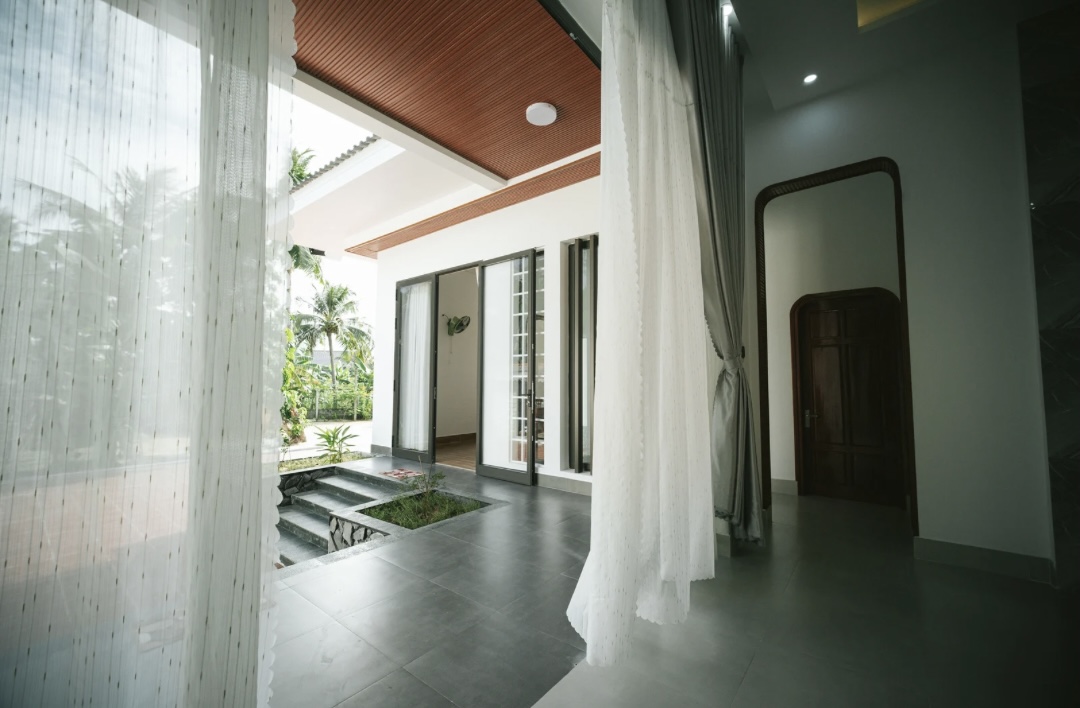
Good airflow, an open floor plan, and ample windows improve indoor air quality, boost natural light exposure, and support healthier circadian rhythms—helping create a more restorative living environment.
Community and walkability
Loneliness and social isolation are associated with faster aging, while regular movement and social connection are protective. A home in a walkable neighborhood—or one designed with easy outdoor access, porches, or shared spaces—encourages daily walking and neighborly interaction. Even modest increases in physical activity and social engagement have been tied to better biological age markers.
Dedicated home gym and wellness area
Consistent exercise is one of the strongest modifiable factors for reducing biological age acceleration. A dedicated home gym makes this far more attainable. By removing the friction of commuting, packing a bag, or waiting for equipment, a well-designed space inspires daily use and dramatically increases the odds of consistency—the factor that matters most for long-term results. Pairing the room with good air quality, natural light, and comfortable temperature control further supports recovery and adherence, turning the space into a practical longevity tool rather than unused square footage.
Wellness Development Is The Future
Demand for wellness-focused homes is surging. According to the Global Wellness Institute, the wellness real estate market grew from $151 billion in 2017 to $876 billion in 2025 and is projected to reach $1.8 trillion by 2030—expanding 23% in the last year alone, far outpacing the 3% growth of overall construction. Reflecting this shift, 60% of homeowners now rank health and wellness features as their top purchase motivator. (For more on how this trend is reshaping residential design, see our earlier piece on the rise of wellness real estate.)
Your home cannot rewrite your DNA, but thoughtful design can create an environment that supports healthier cells, better sleep, regular movement, and stronger social ties. For many people, that adds up to a lower biological age—and more healthy years. Now that is something worth paying for.