
Home Gym 101: Essential Equipment Guide for Home Builders & Specifiers
A basic home gym needs three things: a strength station, a cardio station, and an open stretching area. That mix covers resistance training, conditioning, and recovery without turning a spare room into a warehouse of unused machines.
For builders and specifiers, the goal is not to fill every square foot. It is to plan zones early so electrical, flooring, ceiling height, and storage are in the right places before finishes go in.
What Equipment Does a Basic Home Gym Need?
A complete starter home gym typically includes a functional trainer or cable unit, a matching set of dumbbells and kettlebells, one cardio machine (most often a treadmill), rubber flooring, and an open area for stretching. Those things support most workouts clients will actually use.
Keep the layout simple: strength on one wall, cardio on another, and an open mat zone in the center or near a window. Clients stay consistent when the room is easy to enter and easy to reset.
Strength & Accessories: Power Racks & Functional Trainers Plus Matching Free Weights
A cable-based functional trainer is a great place to start. Typically these are space-efficient and offer quite a bit of versatility in return. Dual adjustable pulleys handle presses, rows, chops, pulls, and core work without a full rack of single-purpose machines. Units with integrated storage are especially useful in residential projects because shelves, pegs, and accessory hooks keep bands, handles, and small weights off the floor. See Roombldr’s guide to cable units with integrated storage for compact options that pair training with organization.
Power racks provide a platform for some of the best exercises, including squats, pull ups, bench presses and more. Adjustable J-cups and safety pins catch missed lifts, so you can squat, bench, and press without a spotter. Frames can also handle pull-ups, rack pulls, and add-ons like dip bars, landmine stations, or a lat pulldown. It supports progressive overload on the big compound lifts, lasts for years, and replaces several machines in a small footprint. A half rack saves space; a full cage adds more enclosed safety. Keep spacial considerations in mind.
Add dumbbells and kettlebells next. They cover accessory work, unilateral training, and conditioning that cables cannot fully replace. Buy them in sets from the same vendor. Matching finishes look intentional in a finished home, and a coordinated rack or tray stores faster than mixed brands of different sizes and colors. A matching set also photographs better in listings and walk-throughs.
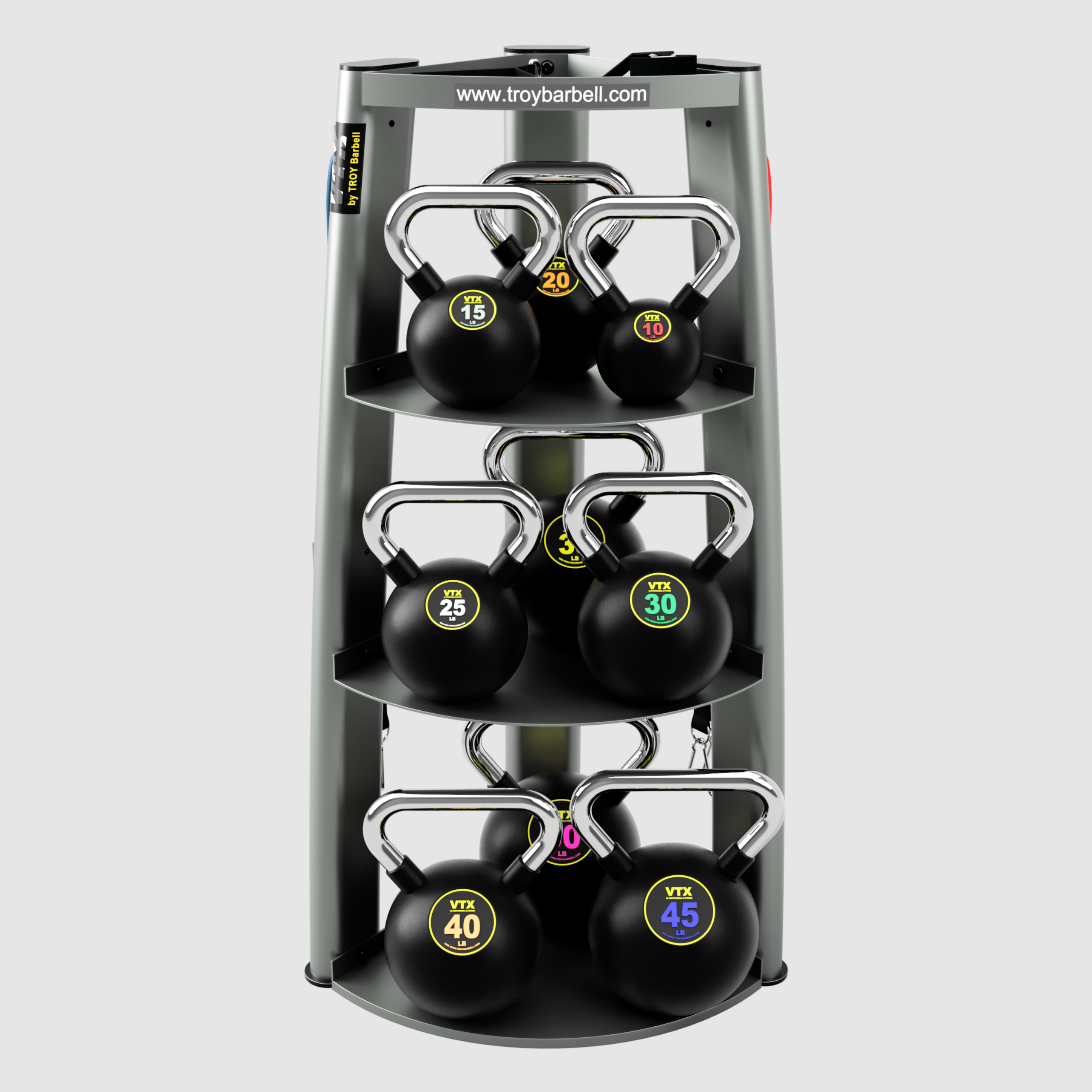
Premium kettlebells + storage from Troy/USA. Photo credits Troy/USA
Pro Tip: Get A Plan
Roombldr’s Get a Plan service turns your floor plans into custom home gyms. A specialist works with you virtually using 3D software and to-scale equipment models to produce 2D/3D renderings, layouts, spec sheets, pre-install requirements, pricing, and lead times. Builders, designers, and architects can add wellness rooms as a turnkey upgrade—without becoming fitness experts—then execute with clear specs and coordinated supply.
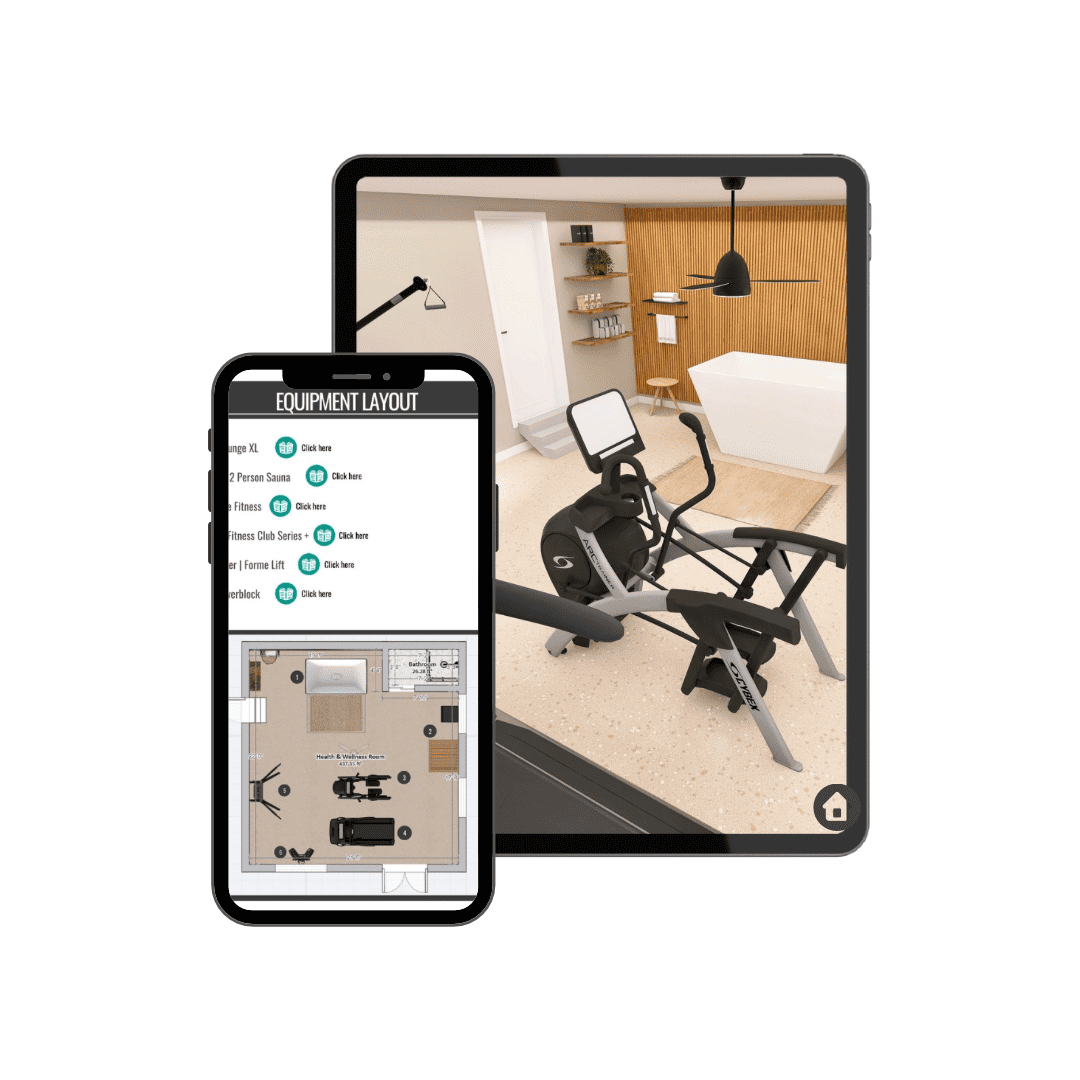
Modern and hyper-realistic designs help rooms come to life before committing. Contact Roombldr to get a custom plan for your house.
Cardio: Treadmills Still Lead, Curved Models Are Rising
Treadmills remain the most requested cardio piece in home gyms because walking and running are familiar, weather-proof, and easy for the whole household. Plan for footprint, ceiling clearance, and a dedicated circuit if the unit is motorized.
Curved, self-powered treadmills are getting more popular in homes. They (typically) use no motor, promote a more natural stride, and need less electrical infrastructure. They also tend to last longer with fewer moving parts. Roombldr covers the benefits of curved self-powered treadmills if a client wants lower maintenance and a more athletic feel.
If the room is tight, a compact treadmill still beats skipping cardio entirely. Leave clearance behind and on both sides for safe mounting and dismounting.
Leave an Open Stretching Area
Do not pack equipment wall to wall. A basic home gym should keep a clear zone for mobility, yoga, warm-ups, and cool-downs. A quality mat, a foam roller, and enough floor to lie down with arms extended is enough.
This open area also makes the room feel larger and safer. Builders should treat it as programmed space, not leftover space. Eco-friendly rubber flooring across the full room is cleaner than a patch under one machine.
Checklist
- Flooring: Dense rubber over a stable subfloor. It protects finishes and reduces noise, especially when Olympic-style lifts are in the plans.
- Ceiling height: Confirm clearance for cable columns, pull-up bars, and overhead presses. 10’ is ideal.
- Power and HVAC: Treadmills typically need a dedicated outlet; the room needs airflow.
- Mirrors and lighting: Help with form and make a smaller gym feel finished.
- Storage: Specify it with the strength unit so accessories do not migrate into living space.
A basic home gym does not require a commercial inventory. Specify a functional trainer with storage, matching dumbbell and kettlebell sets, a treadmill (standard or curved), and an open stretch zone. That is the setup most homeowners will use, maintain, and show off.
Quick answers
How much space does a basic home gym need?
Plan on about 120–200 square feet for strength, a treadmill, and a stretch zone. Smaller rooms work if the trainer has built-in storage and cardio stays compact.
Should dumbbells and kettlebells be bought as a set?
Yes. Same-vendor sets match in color, size increments, and rack design, which improves storage and the finished look of the room.
What strength equipment belongs in a home gym?
Start with a functional trainer or power rack, then add matching dumbbells and kettlebells. Units with integrated storage keep accessories off the floor and free space for stretching.
Why include a treadmill in a home gym?
Treadmills are still the most requested cardio piece because walking and running work for the whole household year-round. Curved, self-powered treadmills are also getting popular for lower maintenance and a more natural stride.
What should home builders plan before installing a gym?
Confirm flooring, ceiling height, power, HVAC, lighting, and storage early. Motorized treadmills often need a dedicated circuit. Treat the stretch zone as programmed space, not leftover floor.